

Do you suffer from incontinence or pain in the pelvic area, or do you not feel fully recovered after giving birth? At our practice for orthopaedics and physiotherapy in Vienna we offer professional pelvic floor training – tailored individually to you.
Pelvic floor therapy is far more than pure muscle training – it is a targeted physiotherapeutic approach to treating functional disorders in your pelvic area.
Pelvic floor therapy can noticeably relieve or even completely resolve your complaints and contributes significantly to restoring your control, stability and quality of life.
Pelvic floor therapy is particularly useful in the following situations:
Targeted pelvic floor training aims to improve the function and strength of your pelvic floor muscles in the long term:
It affects not only your muscle tone but also the interplay of your breathing, posture and body awareness – for more control, stability and quality of life.
What you can achieve through the training:

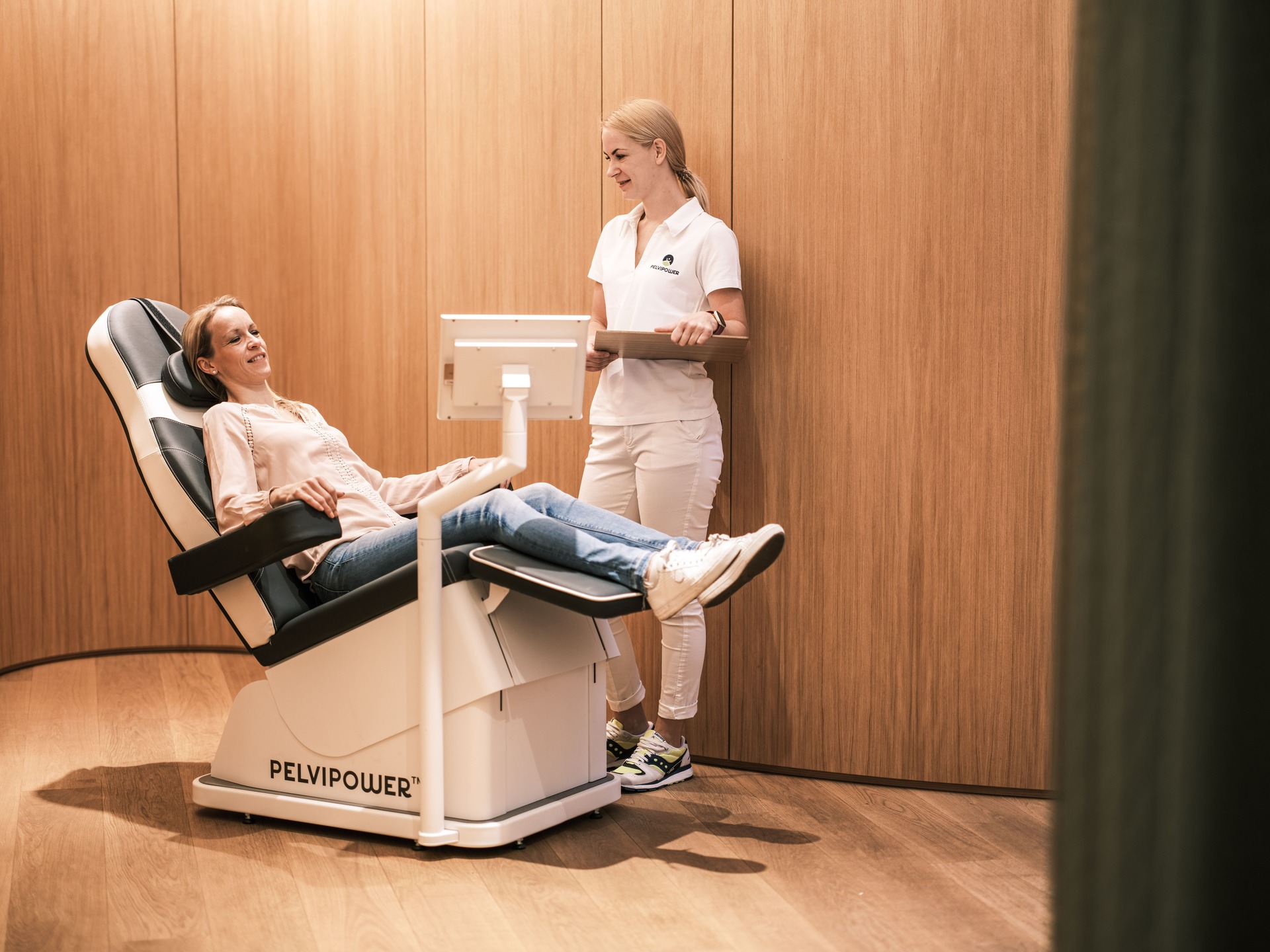
Pelvic floor training at our practice is based on the innovative PelviPower technology – a medical training chair that activates your pelvic floor muscles in a targeted and effective way using magnetic field impulses. The therapy is individually adapted and professionally supervised.
The physiotherapist gathers information about your medical history, symptoms and previous injuries. This helps to better understand your state of health and to form initial working diagnoses.
Depending on your needs and goals, an individual training plan is created on the PelviPower and saved on your training card.
In some cases it is advisable to carry out additional sessions with the therapist. This can help to improve awareness of the pelvic floor and make the PelviPower training even more effective.
After a successful introduction and supervised first treatment you can continue training independently. You also receive practical recommendations for everyday life in order to support the training effect in the long term and to prevent complaints.
The PelviPower chair is a latest-generation medical training device that passively activates your pelvic floor muscles in a gentle yet highly effective way – entirely without physical exertion.
Targeted magnetic field impulses stimulate the muscles in your pelvic area deep within the tissue. The application is simple, safe and comfortable.
The advantages of PelviPower at a glance:
After just a few sessions many patients report noticeable improvements – whether in bladder control, body awareness or general stability in everyday life.
The satisfaction and trust of our patients matter greatly to us – their feedback motivates us every day to deliver the highest quality in pelvic floor therapy.
Here some of them share their personal experiences of treatment at our practice.
Gepostet auf Google
 Martin Wro
Trustindex überprüft, ob die Originalquelle der Bewertung Google ist.
Sehr zufrieden!Gepostet auf Google Andreas PflockDas Andrukonis-Team (Spallartgasse) hat definitiv meinen einwöchigen Wien-Aufenthalt gerettet. Gute Erstorientierung über die Website mit Terminsuche, sehr freundliches Telefonat und drei Stunden später der erste Termin, um eine üble Blockade im Iliosakralglenk zu lösen. Auch vor Ort ein sehr freundlicher Empfang und anschließend eine Behandlung mit sorgfältiger Anamnese und wohltuenden Griffen in angenehmer Atmosphäre. Schon nach dem ersten Termin war die Blockade des Ischiasnervs deutlich gelockert. Nach einem zweiten Termin war ich wieder blockadefrei. Danke an die Praxis für die freundliche Aufnahme und an Natalia für die Behandlung, die meinen Urlaub gerettet hat. Wäre die Distanz nicht so groß, würde ich jederzeit gerne wiederkommen.Gepostet auf Google
 Begüm Cakin⭐⭐⭐⭐⭐ Ich war vor einigen Monaten im Institut Andrukonis zur manuellen Lymphdrainage und kann dieses Institut uneingeschränkt weiterempfehlen. Vom ersten Moment an habe ich mich dort sehr wohl und herzlich willkommen gefühlt. Das gesamte Team ist ausgesprochen freundlich, aufmerksam und professionell. Man merkt sofort, dass hier mit viel Menschlichkeit und Engagement gearbeitet wird. Mehrmals wurde ich von meiner fünfjährigen Tochter begleitet. Auch sie wurde jedes Mal mit großer Herzlichkeit aufgenommen, was für uns beide sehr angenehm war. Diese warme und familiäre Atmosphäre ist etwas ganz Besonderes. Die manuelle Lymphdrainage hat mir sehr gutgetan, und ich habe mich nach den Behandlungen deutlich besser gefühlt. Ich wurde stets kompetent beraten und hervorragend betreut. Ein großes Dankeschön an das gesamte Team von Andrukonis für die liebevolle Betreuung und die angenehme Atmosphäre. Ich habe mich jederzeit bestens aufgehoben gefühlt und komme gerne wieder. Absolute Empfehlung für alle, die eine professionelle Behandlung mit Herz suchen! ⭐⭐⭐⭐⭐Gepostet auf Google
 Andrea SchneiderLaura und Ines sind super tolle und kompetente Physiotherapeutinnen.Gepostet auf Google
 Oscar Diaz UrbanoAlle sind sehr nett und gute Fachleute. Der Ort ist schön und groß. Ich habe mich dort sehr wohl gefühlt. Ich empfehle ihn gerne weiter.Gepostet auf Google
 Viktor KlieschIch kann die Praxis ANDRUKONIS und besonders Dr. Shaabani nur wärmstens empfehlen. Vom ersten Moment an fühlt man sich bestens aufgehoben und professionell betreut. Dr. Shaabani nimmt sich viel Zeit, erklärt die Behandlung verständlich und überzeugt mit großer Kompetenz sowie Menschlichkeit – in meinem Fall bei einer Stoßwellentherapie für eine verkalkte und schmerzhafte Schulter. Auch das gesamte Ordinationsteam ist außergewöhnlich freundlich, hilfsbereit und zuvorkommend. Eine Praxis, in der man sich als Patient wirklich wohl, ernst genommen und bestens betreut fühlt.Gepostet auf Google
 Christine PreisingerSehr freundliches, hilfsbreites Team!Gepostet auf Google
 sz. sommerDas Personal ist sehr gut und professionell. Die Therapeutin hat die kranke Stelle sofort erkannt und erfolgreich behandelt.


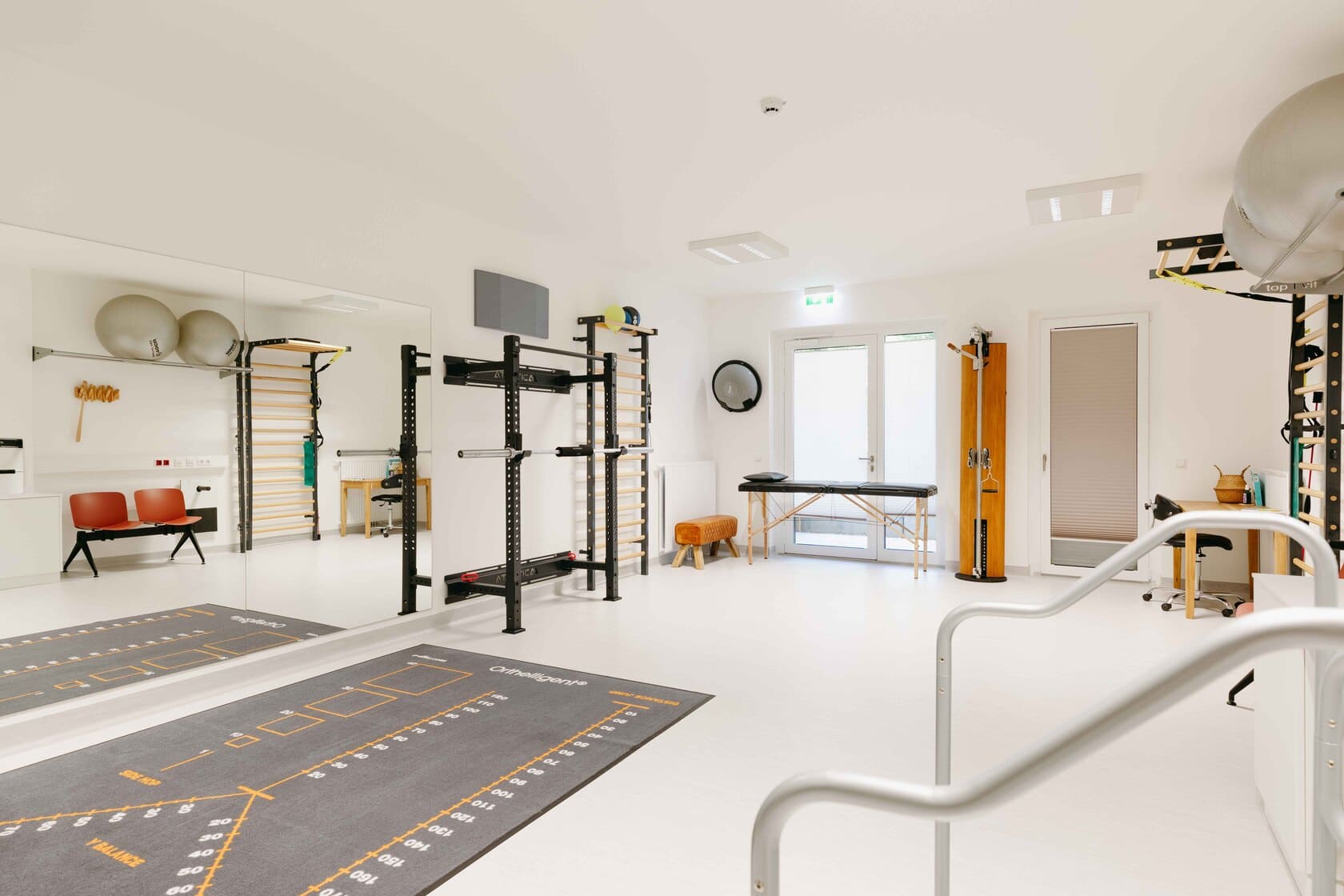
At our modern, barrier-free practice at Spallartgasse 19/1, 1140 Vienna, we offer you individual pelvic floor therapy at the highest level.
In a pleasant atmosphere we combine physiotherapeutic methods with innovative medical technology – such as the PelviPower, which is used under therapeutic guidance to activate and strengthen your pelvic floor muscles in a targeted way.
The practice is conveniently located and easy to reach by public transport (U3 Hütteldorfer Straße, S45 Breitensee). Parking is available nearby for those arriving by car.
For pelvic floor training we combine personal support from your physiotherapist with training on the PelviPower chair, depending on your individual needs, relying on state-of-the-art technical and professional expertise.
The first session always takes place under the guidance of a physiotherapist and is free of charge for you. During this introduction the way the PelviPower works is explained, your individually tailored training programme is set up and your settings for optimal training are discussed.
This means that later on you can book additional therapy sessions independently at any time, with or without supervision by a physiotherapist.
After an initial introduction to the PelviPower chair by your physiotherapist, you can also complete the PelviPower training on your own – conveniently and flexibly at agreed times.
You agree the optimal combination of classic physiotherapy and the PelviPower chair with your physiotherapist during the first session.
Cost of PelviPower treatment:
Independent sessions (without physiotherapy) cost €39 and last 25 minutes.
Discount: when you purchase 10 sessions we give you a 10% reduction.
The pelvic floor plays a central role in continence (retaining urine and stool), in posture and in our general well-being. Often, however, the pelvic floor is only noticed once complaints arise.
Pelvic floor physiotherapy offers targeted help with functional disorders and supports you effectively on the way back to greater stability and quality of life. Here you will find out when pelvic floor physiotherapy is useful, how it works and what you can actively contribute yourself.
A weakened pelvic floor can have many causes – often several factors act at the same time. The pelvic floor muscles react sensitively to changes in the body, in hormone levels and to physical strain.
Common causes are:
1. Pregnancy and childbirth
During pregnancy the pelvic floor is placed under considerable strain by the growing weight of the uterus. A vaginal birth – particularly with perineal tears, forceps delivery or a large foetal position – can additionally overstretch or injure the large pelvic floor muscle.
2. Operations in the pelvic area
Surgical procedures, for example on the bladder, uterus, prostate or bowel, can weaken pelvic floor structures or affect the nerve supply to the pelvic floor muscles.
3. Ageing processes and hormonal changes
With increasing age the tissue loses elasticity and muscle strength. In women, falling oestrogen levels during the menopause play an additional role: the connective tissue becomes weaker and muscle tone decreases.
4. Chronic strain from coughing or constipation
Anyone suffering from a chronic cough over a long period (e.g. due to asthma or COPD) or straining heavily during bowel movements regularly increases the pressure in the abdomen – which places enormous strain on the pelvic floor.
5. Heavy lifting and physical overload
Regularly carrying heavy loads, incorrect lifting techniques or physically demanding work can overwhelm the pelvic floor – particularly if the muscles are untrained.
6. Excess weight
Permanently increased pressure in the abdomen due to excess weight can weaken the pelvic floor muscles over time.
7. Neurological conditions
Certain conditions of the nervous system (e.g. multiple sclerosis, paraplegia, stroke) can impair control over the pelvic floor muscles.
Many people use the terms pelvic floor training and pelvic floor therapy interchangeably – but there are important differences:
Pelvic floor training
Pelvic floor training is generally aimed at healthy people who want to strengthen their pelvic floor muscles preventively or to continue training after completing therapy.
It is often offered in groups or in a fitness context and comprises targeted exercises to activate, strengthen and coordinate the pelvic floor.
The aim is to prevent complaints or improve quality of life – for example in:
Pelvic floor therapy
Pelvic floor therapy, on the other hand, is a medical-therapeutic approach used for existing complaints or functional disorders of the pelvic floor – for example in:
It is carried out by specialised physiotherapists and is tailored individually to the particular problem. In addition to targeted exercises it often includes manual techniques, breathing training, postural correction and advice for everyday life.
Yes, for physiotherapeutic treatment with reimbursement from your health insurer you need a medical prescription. You can obtain one from your GP, gynaecologist, urologist or another specialist.
Yes – provided the therapy is carried out by a physiotherapist and an approved medical prescription is available, statutory health insurers reimburse part of the cost. Purely independent training without therapeutic supervision is not covered.
Never. Pelvic floor training is worthwhile at any age – even many years after a birth, an operation or the onset of the first complaints. Even with long-standing problems, targeted training can still bring a clear improvement.
The first physiotherapist-supervised session (including PelviPower) is free. Independent training sessions on the PelviPower (after instruction) cost 35 €. Only supervised sessions are eligible for reimbursement.
Yes, absolutely. Men also benefit from the training – for example with incontinence after prostate surgery, with chronic back pain or for general core stabilisation. The therapy is individually adapted and carried out discreetly.
Improve your posture, continence and sense of well-being through targeted pelvic floor training – safe, effective and individually tailored. Start today with a new feeling for your body!