

Clicking when chewing, pain when yawning or a restricted mouth opening? Jaw joint complaints have a considerable impact on everyday life – and are often treated too late. At the ANDRUKONIS orthopaedic centre we combine physiotherapeutic expertise with interdisciplinary cooperation at the H4O Dental Life Center in order to pinpoint the cause precisely and treat it in a targeted way.


The temporomandibular joint is one of the most heavily used joints in the body – it is constantly in motion when speaking, chewing and swallowing. Functional disorders, incorrect loading or muscular tension often lead to pain that can radiate into the head, neck and ears. We cover the full spectrum of craniomandibular conditions:
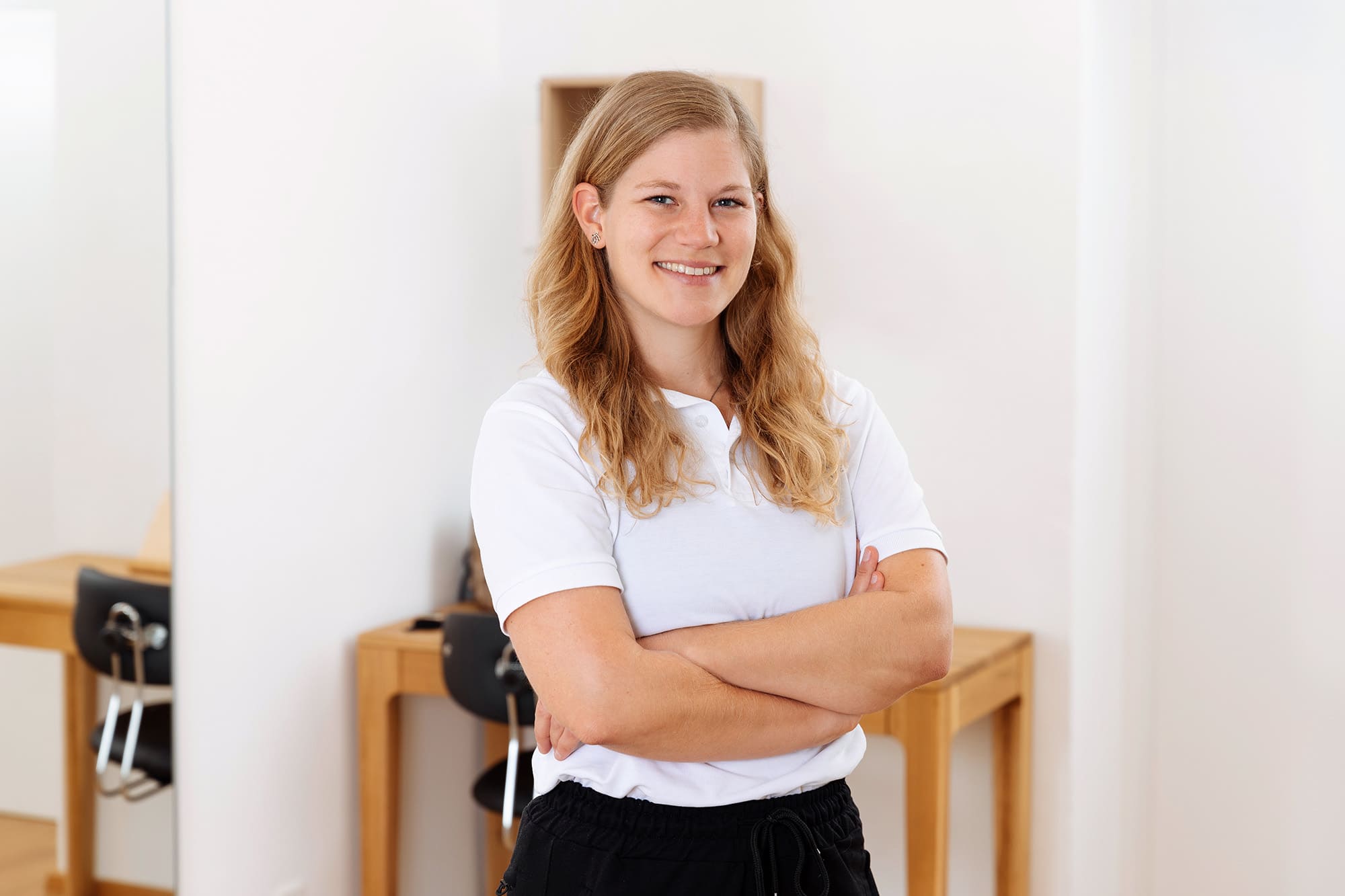
Working as a physiotherapist in various clinics and practices since 2018, specialising in the treatment of jaw joint complaints and craniomandibular dysfunction (CMD).
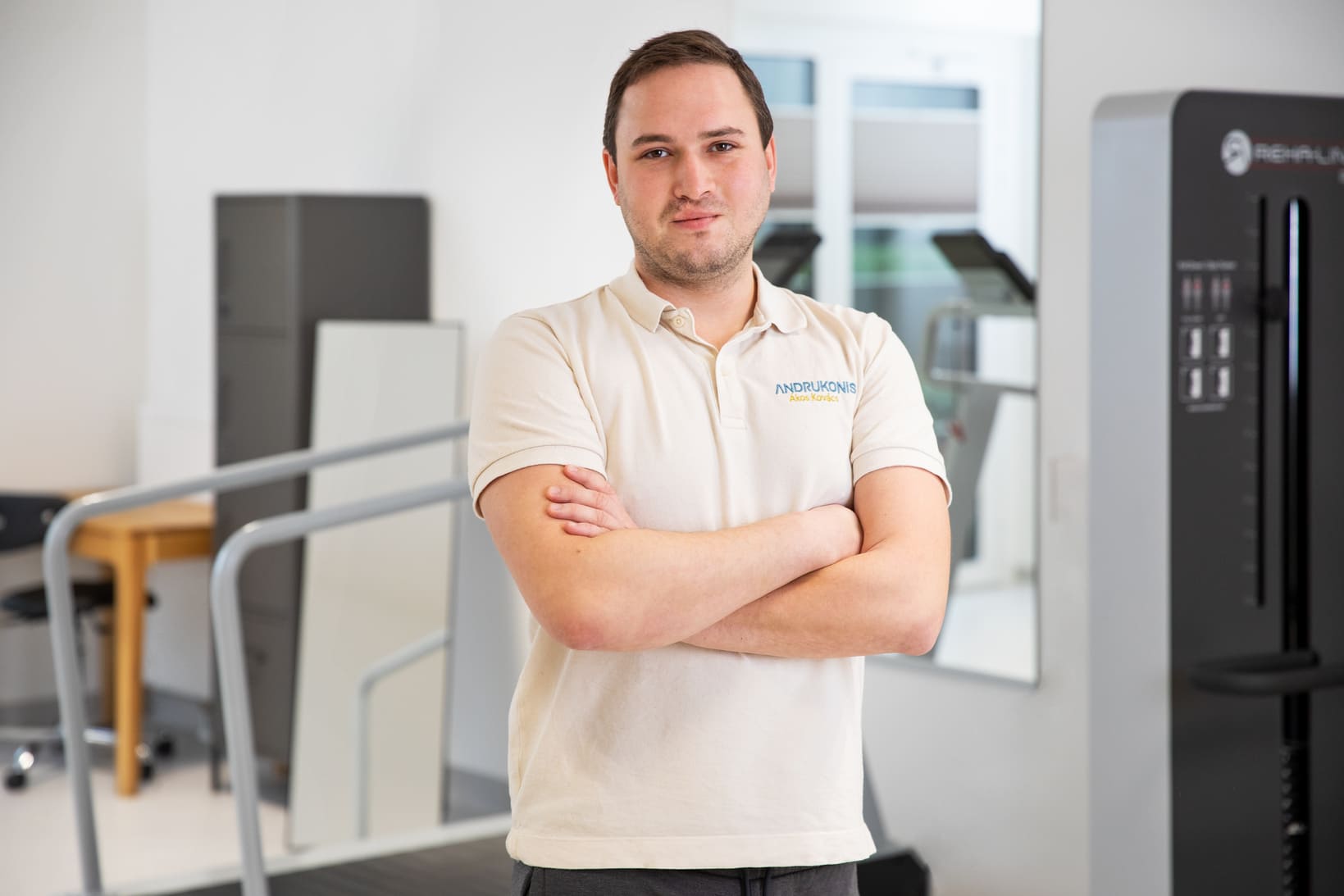
One of our experienced therapists, with extensive further training and passionate commitment.
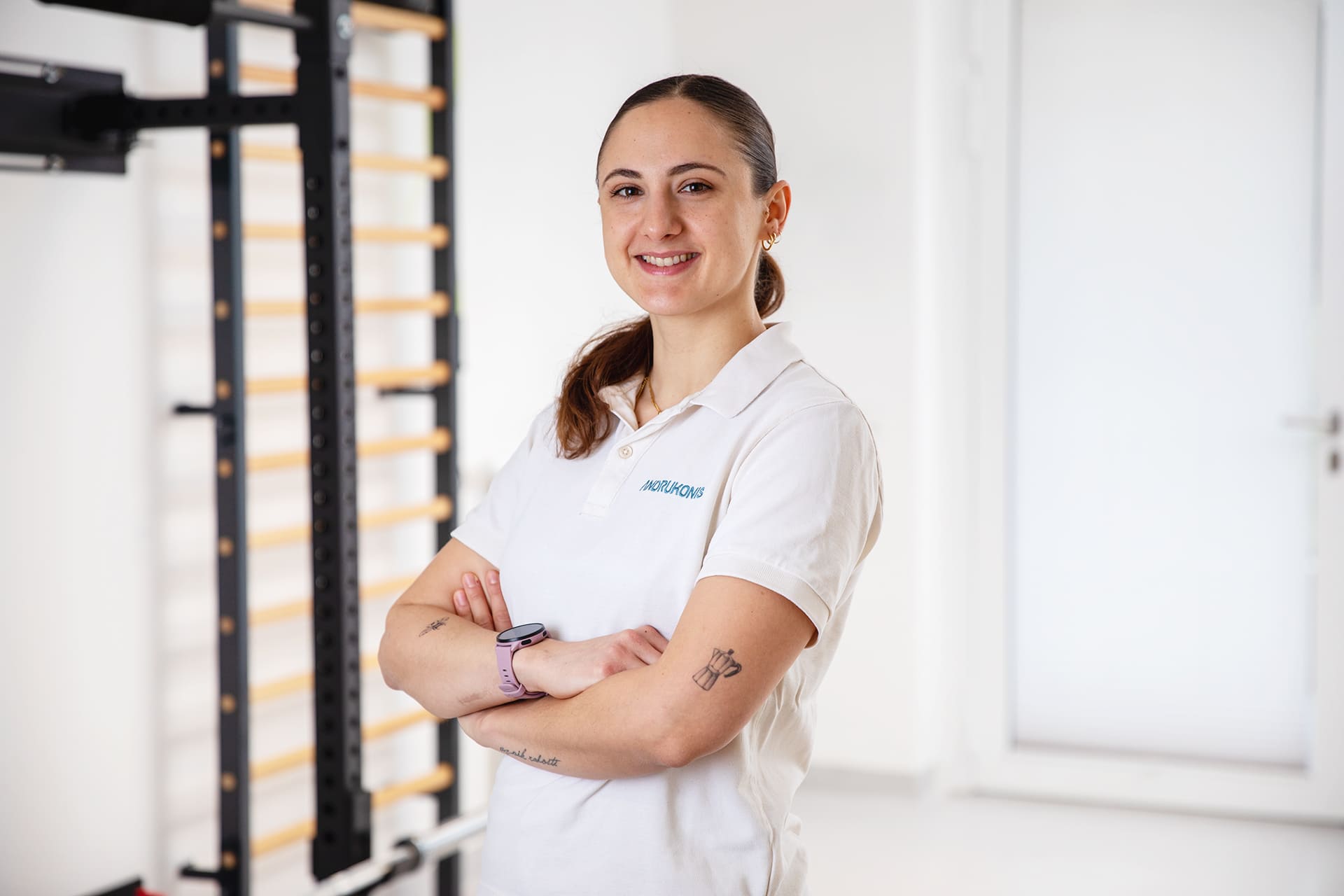
Maja is an experienced CMD therapist with CRAFTA training and a great passion for treating her patients individually.
Jaw joint complaints rarely originate in a single place. The masticatory muscles, the teeth, the cervical spine and even posture frequently interact. That is precisely why we rely on holistic, orthopaedically grounded diagnostics that never view the jaw joint in isolation, but always in the context of the entire musculoskeletal system.
A key advantage of our work lies in the cooperation at our location in the H4O Dental Life Center in the 21st district. With a focus on CMD (craniomandibular dysfunction) physiotherapy and dentistry work directly together there. When jaw, neck and head lose their balance, diagnostic and therapeutic steps – from splint therapy to manual treatment – can be coordinated immediately.
For patients this means coordinated findings, short distances and considerably more effective treatment. We treat not only the symptom but identify and resolve the actual cause of the jaw joint pain.


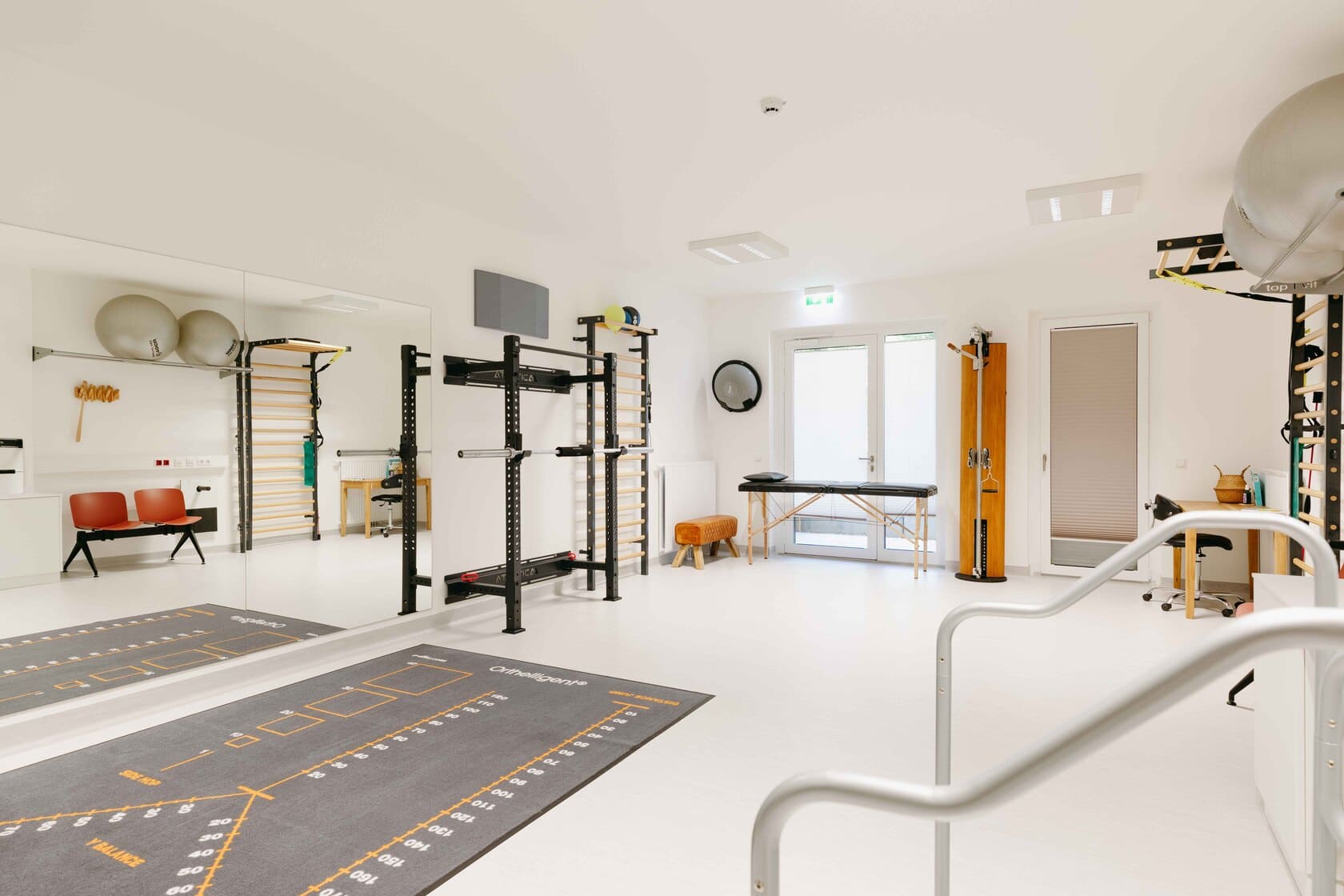
Our orthopaedic centre offers barrier-free access as well as excellent public transport connections.
At the heart of it is the close cooperation between the orthopaedic specialists and physiotherapists working at the centre, which makes individually tailored, holistic care possible.
The specialists working at the centre create a pleasant atmosphere in which patients can feel well looked after both medically and personally. Modern, spacious premises provide a calm and inviting environment.
The organisational team supports smooth practice operations through structured processes and coordinated communication, contributing to a coherent overall experience.
At our orthopaedic centre we rely on current, scientifically sound treatment methods. From precise functional diagnostics through manual therapy to device-based procedures such as shockwave and electrotherapy, we select the method to match the individual findings – never a one-size-fits-all approach.
With CMD in particular, our patients benefit from the close integration with dentistry at the H4O Dental Life Center. Splint therapy, dental findings and physiotherapeutic treatment mesh directly with one another, which allows the therapy plan to be adjusted quickly.
Trust is built on experience. Numerous patients have recommended us as a TMJ specialist in Vienna and value the noticeable relief after targeted treatment. Their feedback confirms our holistic approach and the interdisciplinary work at our locations. Read for yourself what our patients report:

Gepostet auf Google
 Martin Wro
Trustindex überprüft, ob die Originalquelle der Bewertung Google ist.
Sehr zufrieden!Gepostet auf Google Andreas PflockDas Andrukonis-Team (Spallartgasse) hat definitiv meinen einwöchigen Wien-Aufenthalt gerettet. Gute Erstorientierung über die Website mit Terminsuche, sehr freundliches Telefonat und drei Stunden später der erste Termin, um eine üble Blockade im Iliosakralglenk zu lösen. Auch vor Ort ein sehr freundlicher Empfang und anschließend eine Behandlung mit sorgfältiger Anamnese und wohltuenden Griffen in angenehmer Atmosphäre. Schon nach dem ersten Termin war die Blockade des Ischiasnervs deutlich gelockert. Nach einem zweiten Termin war ich wieder blockadefrei. Danke an die Praxis für die freundliche Aufnahme und an Natalia für die Behandlung, die meinen Urlaub gerettet hat. Wäre die Distanz nicht so groß, würde ich jederzeit gerne wiederkommen.Gepostet auf Google
 Begüm Cakin⭐⭐⭐⭐⭐ Ich war vor einigen Monaten im Institut Andrukonis zur manuellen Lymphdrainage und kann dieses Institut uneingeschränkt weiterempfehlen. Vom ersten Moment an habe ich mich dort sehr wohl und herzlich willkommen gefühlt. Das gesamte Team ist ausgesprochen freundlich, aufmerksam und professionell. Man merkt sofort, dass hier mit viel Menschlichkeit und Engagement gearbeitet wird. Mehrmals wurde ich von meiner fünfjährigen Tochter begleitet. Auch sie wurde jedes Mal mit großer Herzlichkeit aufgenommen, was für uns beide sehr angenehm war. Diese warme und familiäre Atmosphäre ist etwas ganz Besonderes. Die manuelle Lymphdrainage hat mir sehr gutgetan, und ich habe mich nach den Behandlungen deutlich besser gefühlt. Ich wurde stets kompetent beraten und hervorragend betreut. Ein großes Dankeschön an das gesamte Team von Andrukonis für die liebevolle Betreuung und die angenehme Atmosphäre. Ich habe mich jederzeit bestens aufgehoben gefühlt und komme gerne wieder. Absolute Empfehlung für alle, die eine professionelle Behandlung mit Herz suchen! ⭐⭐⭐⭐⭐Gepostet auf Google
 Andrea SchneiderLaura und Ines sind super tolle und kompetente Physiotherapeutinnen.Gepostet auf Google
 Oscar Diaz UrbanoAlle sind sehr nett und gute Fachleute. Der Ort ist schön und groß. Ich habe mich dort sehr wohl gefühlt. Ich empfehle ihn gerne weiter.Gepostet auf Google
 Viktor KlieschIch kann die Praxis ANDRUKONIS und besonders Dr. Shaabani nur wärmstens empfehlen. Vom ersten Moment an fühlt man sich bestens aufgehoben und professionell betreut. Dr. Shaabani nimmt sich viel Zeit, erklärt die Behandlung verständlich und überzeugt mit großer Kompetenz sowie Menschlichkeit – in meinem Fall bei einer Stoßwellentherapie für eine verkalkte und schmerzhafte Schulter. Auch das gesamte Ordinationsteam ist außergewöhnlich freundlich, hilfsbereit und zuvorkommend. Eine Praxis, in der man sich als Patient wirklich wohl, ernst genommen und bestens betreut fühlt.Gepostet auf Google
 Christine PreisingerSehr freundliches, hilfsbreites Team!Gepostet auf Google
 sz. sommerDas Personal ist sehr gut und professionell. Die Therapeutin hat die kranke Stelle sofort erkannt und erfolgreich behandelt.
Headaches and migraine are common accompanying symptoms of CMD, often caused by tension in the jaw and the surrounding muscles.
These headaches typically manifest in the forehead, temple or back of the head and can extend into the neck. They frequently occur together with other CMD symptoms such as jaw pain and can vary in intensity: from dull, constant pain through to throbbing, migraine-like complaints.
This type of headache in CMD can be intensified by stress in everyday life, poor posture or bruxism (teeth grinding) and often affects your daily activities.
Jaw pain is a primary symptom of craniomandibular dysfunction (CMD) and can present as persistent or intermittent pain in the area of the jaw joint.
This pain can intensify when chewing, yawning or speaking. It may be felt on one side or on both sides and often radiates into surrounding areas such as the ears, cheeks or the temple region.
Jaw pain in CMD can range from mild discomfort to severe impairment that significantly affects your everyday life and quality of life.
Ear pain and tinnitus are further common symptoms of craniomandibular dysfunction (CMD). These complaints result from the close anatomical and functional relationship between the jaw joint and the ear region.
Ear pain associated with CMD is often described as dull and pulling and can radiate into the jaw and the face. Tinnitus, a ringing or buzzing in the ear, can also occur.
These symptoms are generally not linked to a direct ear condition but reflect the tension and dysfunction in your jaw area. They can be present intermittently or permanently and vary in intensity, which can lead to a noticeable impairment of your quality of life.
Dizziness and balance disorders are also common symptoms of CMD. They occur when the dysfunction of the jaw joint impairs the normal position of the head and neck, which in turn can affect the balance system.
If you are affected, you will be familiar with a certain feeling of unsteadiness when standing or walking – a sensation as if your surroundings are spinning or swaying. These symptoms can be intensified by movements of the head or jaw.
Dizziness in CMD can be episodic or persistent and often impairs everyday life, as it increases the risk of falls and can limit your ability to carry out daily tasks.
Restricted jaw movement is a characteristic symptom of craniomandibular dysfunction (CMD), presenting as difficulty opening, closing or moving the mouth sideways. This restriction can range from mild discomfort to clearly noticeable blockages, impairing everyday functions such as speaking, chewing or yawning.
You may experience the restricted jaw movement as a feeling of stiffness in the jaw joint or even as a “locking” of the jaw, where the mouth temporarily cannot be fully opened or closed.
These movement restrictions can be intermittent or constant and are often a direct consequence of muscular tension, incorrect loading or structural changes in your jaw joint.
Clicking or grinding in the jaw joint are typical signs of craniomandibular dysfunction (CMD). These sounds often arise when jaw movements no longer run smoothly, which indicates incorrect positioning or loading of the jaw joint.
Patients often report audible and palpable clicking or grinding when opening, closing or chewing.
While these sounds may be painless in themselves, they are often accompanied by other complaints such as pain or restricted jaw mobility. The clicking or grinding can occur sporadically or be a regular phenomenon and is regarded as an indicator of mechanical irregularities in the jaw joint.
Treating jaw joint pain requires a holistic approach. At the ANDRUKONIS orthopaedic centre we combine state-of-the-art diagnostics with individually tailored forms of therapy – from manual therapy through splint treatment to shockwave therapy. Find out what can help with your complaint.
An accurate diagnosis is the first step towards targeted therapy. Our physiotherapists carry out a comprehensive functional examination of the jaw joint, masticatory muscles, cervical spine and posture. Where necessary we work closely with the dentists at the H4O Dental Life Center.
Jaw joint pain arises from a variety of causes: stress and teeth grinding, a misaligned bite or malpositioned teeth, injuries (e.g. whiplash), postural damage, inflammatory conditions such as arthritis or degenerative changes such as osteoarthritis. Several factors frequently act together – which is why interdisciplinary assessment is so important.
Physiotherapy is the core discipline in the treatment of jaw joint pain. Targeted manual techniques, mobilisation, trigger point treatment and exercise programmes reduce pain, improve joint function and prevent recurrence. Book an appointment with our TMJ specialist team today.